Emotions can feel like unpredictable waves. Learn how to navigate your inner world by actively practicing emotional transitions and regaining control. Discover practical strategies for healthy mind management.

Navigating the Waves of Your Emotions: Are You in Control?
Throughout our daily lives, we all experience countless shifts in our emotional state. One moment we might feel content, and the next, an unexpected situation can bring on feelings of anxiety or frustration. Sometimes, these emotional currents can feel overwhelming, making it difficult to maintain a sense of control. While emotions are a natural part of life, how can we find balance and respond healthily amidst such rapid changes? This article aims to explore practical strategies for navigating these emotional tides without being swept away, enabling you to consciously direct and transition your feelings. We will delve into essential mind management techniques that help you reclaim agency over your life and cultivate a more stable, enriched inner world.

Why Do Our Emotions Sometimes Feel So Confusing?
Emotions are the body's and mind's natural responses to external stimuli or internal thoughts. However, we often find ourselves confused, without a clear understanding of where these feelings originate. A primary reason for emotional upheaval is our 'automatic reactions.' We tend to respond instantly and unconsciously to specific situations or thoughts, based on past experiences or learned patterns. For instance, reacting excessively sensitively to minor criticism or feeling easily frustrated by unexpected events are common examples. These automatic responses can sometimes escalate situations unintentionally or drain our mental energy unnecessarily. Moments when emotions feel like they're in control often occur when we fail to break free from these automatic emotional links. The first step toward healthy emotional regulation begins with recognizing and understanding your own emotional response patterns.
※ This post contains affiliate links. I may earn a commission at no extra cost to you.

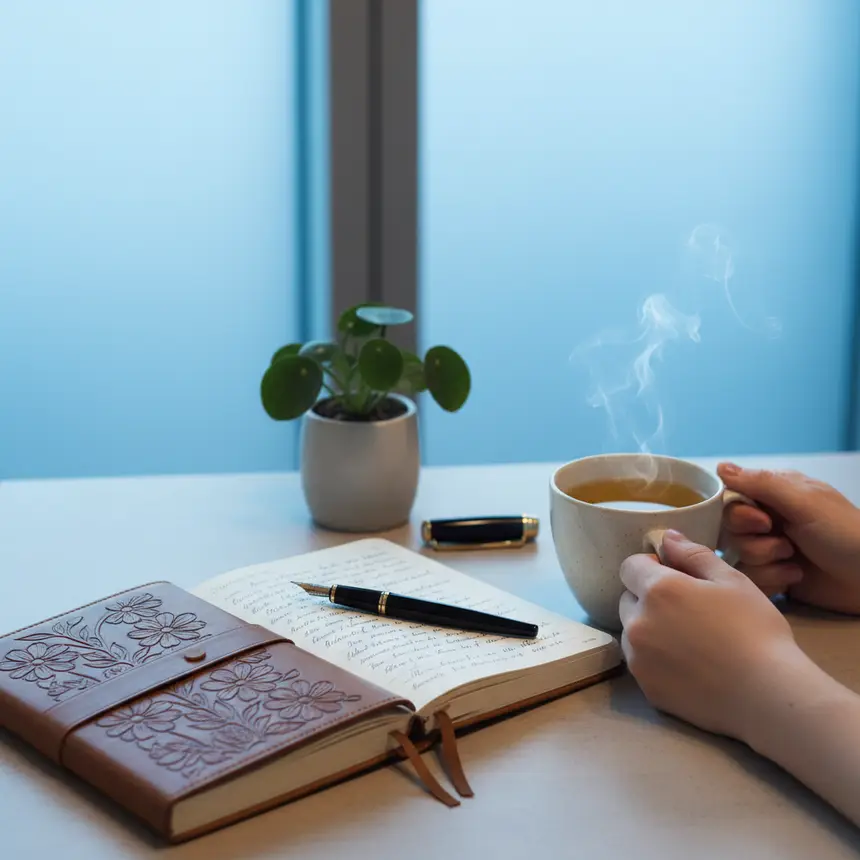
Three Transformative Strategies for Inner Peace
To effectively manage and smoothly transition your emotional flow, effort across three key areas is essential: thoughts, habits, and environment. First, 'reconstructing your thoughts' involves practicing how to interpret the same situation differently. For example, by reframing failure not as an 'end' but as a 'learning opportunity,' you can transform frustration into motivation for growth. This highlights that our feelings stem more from our interpretation of facts than from the objective facts themselves. Second, 'cultivating healthy habits' significantly helps in moderating emotional fluctuations. Short, regular mindfulness sessions, deep breathing exercises, or journaling positive affirmations can foster a sense of inner calm and gently facilitate emotional transitions. Third, 'optimizing your environment' refers to consciously adjusting your physical and social surroundings. Creating a comfortable, organized space or spending time with people who radiate positive energy can effectively reduce the impact of negative emotions and maintain a positive emotional state. Implementing these three strategies into your daily life can help you regain mastery over your emotions.

Practical Routines to Enhance Emotional Control
The ability to actively shift emotions improves with consistent practice. Here are some practical routines you can easily try in your daily life:
- Emotional Simulation Practice: Assign yourself a specific emotional state (e.g., 'I feel anxious right now'), then consciously imagine transitioning to a different state (e.g., 'calm and focused'). For instance, recall an unpleasant situation, then pause, take a deep breath, and try to view that situation from a neutral, third-person perspective. This helps practice consciously activating your emotional 'switch.'
- Expressing Emotions Physically: Our bodies are intimately connected to our emotions. When feeling down, consciously straightening your shoulders, smiling, and walking with a more energetic stride can positively shift your internal emotional state. When you want to change your energy, try moving your body gently.
- Emotional Labeling and Choice: When a specific emotion arises, 'name' it, observe it briefly, and then tell yourself, 'I'm feeling this emotion, but I'm choosing a different action instead.' For example, 'I feel angry right now, but I choose understanding instead of blame.' This practice helps you make wise choices rather than being overwhelmed by emotions.

Your Inner World is Within Your Control
The journey to becoming the master of your emotions doesn't happen overnight. However, through consistent self-observation and practice, we can navigate the waves of life skillfully, much like a surfer riding the ocean, instead of being swept away. Healthy emotional regulation and flexible emotional transition techniques are crucial for responding calmly to stressful situations, maintaining harmonious relationships, and ultimately living a more fulfilling life. Your emotions are not your adversaries; they are powerful tools for understanding your inner self and enriching your life. Starting today, embrace small changes to reclaim your inner peace and control, building a stronger you. You are absolutely capable of achieving this.
Frequently Asked Questions
Q. Is emotional regulation the same as emotional suppression?
A. No, they are distinct. Emotional regulation means recognizing, understanding, and choosing how to express or shift your emotions healthily, rather than simply repressing or avoiding them. Suppression can lead to greater emotional problems in the long run.
Q. Why is training in emotional transition important?
A. Emotional transition training helps us break free from automatic emotional reactions, enabling us to respond more flexibly and wisely to situations. This significantly contributes to stress reduction, improved relationships, and an overall enhanced quality of life.
Q. Can I quickly change negative emotions into positive ones?
A. Instead of forcing a change, it's crucial to first acknowledge and accept negative emotions. Then, practice gradually guiding that emotional energy in a different direction through healthy methods like breathing exercises, physical activity, or cognitive reframing. Focusing on gradual transition rather than radical change is more effective.
Q. How long does it take to develop emotional regulation skills?
A. While it varies for each individual, emotional regulation is a skill that improves gradually through consistent practice and self-observation. Regular short practice sessions are key, and accumulating efforts to notice your emotional reactions and approach them in new ways will undoubtedly lead to noticeable changes.