Understanding and nurturing a child's emotional expression is key to their development. Learn practical strategies for parents to build positive emotional management habits and foster healthy emotional growth together.

Understanding Your Child's Shifting Emotional Landscape
A child's emotions can often feel like a confusing maze to parents. When a typically lively child suddenly becomes quiet or reacts differently than usual, it's natural to wonder if it's just a phase or a deeper signal. Unlike adults, children often express their feelings through actions, subtle cues, or silence rather than explicit words. Recognizing these nuanced changes and understanding them is the first step in supporting healthy emotional expression in children. When parents strive to read their child's inner world, they open the door to communication and build an essential bridge of understanding.

The Hidden Challenges of Emotional Expression in Early Childhood
It's genuinely challenging for children to clearly articulate complex emotions due to their limited vocabulary and cognitive development. This can lead to frustration for the child, often manifesting as unexplained behaviors like crying, irritability, or defiance. Parents, in their desire to calm or 'fix' the situation, might inadvertently dismiss these emotions by saying things like, "Don't cry" or "It's okay." Such responses can send a message that their feelings are 'wrong,' leading children to suppress or hide them. Unexpressed emotions can negatively impact a child's long-term psychological well-being and hinder the formation of a strong emotional bond between parent and child.
※ This post contains affiliate links. I may earn a commission at no extra cost to you.

Guiding Emotional Understanding: The Power of Validation and Supportive Environments
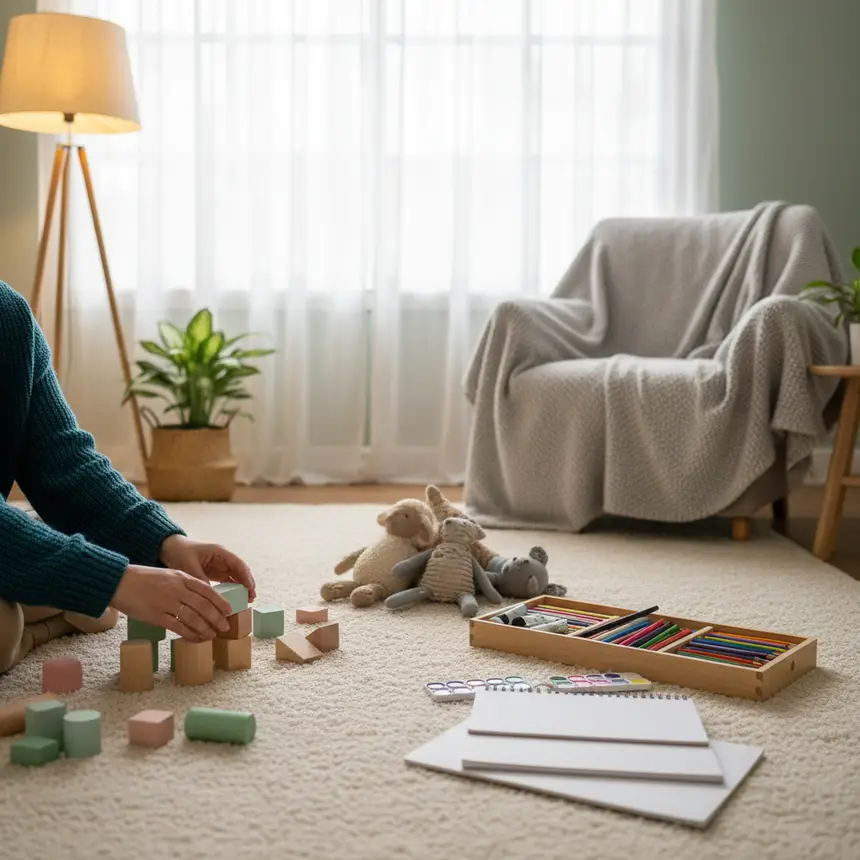
One of the most effective ways to help children navigate their emotional world is through professional support. Play-based approaches, in particular, offer the most natural avenue for children to express their feelings. Play provides a safe environment where children can externalize, understand, and resolve internal anxieties or conflicts. Parents also play a crucial role. Validating a child's feelings without judgment – often called 'emotion coaching' – offers immense comfort and security. Phrases like, "It sounds like you're feeling really disappointed about that," or "It makes sense that you'd be upset," respect the child's emotions and encourage them not to fear expressing themselves. This is a core habit for effective parental emotional management.

Daily Practices for Nurturing Emotional Intelligence
Integrating emotional support into daily life can significantly boost a child's emotional literacy. Here are some practical steps:
- 1. Name the Emotion: Help your child identify feelings by verbalizing what you observe. For example, "You seem frustrated that your tower fell," or "It looks like you're feeling happy playing with your friends." This helps children understand and express their own emotions.
- 2. Empower Through Play: Dedicate time for open-ended play. Activities like drawing, storytelling with puppets, or building with blocks can reveal unspoken feelings and allow children to process experiences safely.
- 3. Active Listening Moments: Set aside a few minutes each day to listen attentively to your child without interrupting or offering solutions. This communicates that their thoughts and feelings matter, encouraging them to share more.
- 4. Model Emotional Awareness: Share your own age-appropriate feelings and how you manage them. "Mommy feels a little tired today, so I'm going to take a quiet moment." This teaches children healthy self-regulation.

A Journey of Mutual Growth: Strengthening the Parent-Child Bond
The journey of understanding and supporting a child's emotional world is a significant opportunity for growth, not just for the child but for the parent too. Through this process, parents gain a deeper understanding of their children and simultaneously learn new ways of managing emotions they may not have known before. As children learn to recognize and express their feelings, parents can witness and participate in this joyful co-growth. When parents and children learn and communicate through the language of emotion together, it goes beyond mere problem-solving; it builds a stronger relationship based on trust and love. A child's healthy emotional development leads to the overall well-being of the family, serving as a solid foundation for all to venture into a broader world.
Frequently Asked Questions
Q. How can I encourage my child to express emotions if they are naturally quiet?
A. Start by paying attention to non-verbal cues like facial expressions and body language. Provide opportunities for indirect emotional expression through play, and model emotional vocabulary yourself by naming feelings. This helps your child learn to identify and articulate their emotions.
Q. I'm worried that validating strong emotions might make my child more defiant. Is this true?
A. Expressing emotions doesn't inherently lead to defiance. The key is to validate the emotion itself while gently guiding appropriate behavioral responses. By accepting the feeling but setting boundaries for unacceptable actions, you teach your child healthy ways to process and communicate their emotions.
Q. Where do I begin if I find it hard to understand my child's emotional cues?
A. Begin by observing your child's behavior and situations where certain emotions seem to arise. Then, try simple reflective statements like, "It looks like you're feeling frustrated," or "That must have been surprising." Showing empathy is a great starting point, and seeking professional guidance can also provide valuable insights.
Q. Does my own emotional regulation as a parent affect my child's emotional development?
A. Absolutely. Parents are the primary emotional role models for their children. When you demonstrate healthy emotional awareness and regulation, your child learns these crucial skills. Your stable emotional state significantly contributes to your child's emotional security and development.
Q. When is it advisable to seek professional help for my child's emotional challenges?
A. Consider professional help if your child's emotional expression or behavioral issues persist for several months, negatively impact their home or school life, or if you, as a parent, feel overwhelmed or unsure how to effectively manage their emotions.