Discover pre-sleep emotional regulation routines for your child's healthy emotional development. Learn practical ways to recognize, express, and release emotions before bed, fostering your child's mental well-being and ensuring peaceful nights.

Lightening the Emotional Load: Winding Down After a Busy Day
Children navigating their formative years encounter a rich tapestry of emotions daily. Beyond joy and curiosity, they often experience complex feelings such as frustration, sadness, or anxiety. As the day draws to a close and bedtime approaches, these unresolved emotions can disrupt their sleep and impact their mood the following day. Since children are still developing the ability to fully understand and articulate their feelings, accumulated emotions might manifest as irritability or inexplicable worries. Parents play a crucial role in guiding them to explore their inner world and express feelings constructively. A restful night's sleep is as vital for a child's emotional stability as it is for their physical growth, making pre-sleep emotional care a fundamental practice for safeguarding their mental well-being.

From Awareness to Regulation: Key Steps in a Child's Psychological Growth
For children to flourish emotionally, they must cultivate the ability to accurately recognize, appropriately express, and effectively regulate their feelings. This emotional management skill isn't innate; it develops progressively through interactions with their environment. Preschoolers and elementary school children, in particular, benefit from careful parental guidance. It's essential not to dismiss a child's shifting moods as merely 'bad behavior,' but rather to understand the underlying causes and needs. Factors like minor disagreements with friends, academic challenges, or apprehension about new situations can all create ripples in a child's emotional landscape. When parents listen empathetically and acknowledge these feelings, children sense their emotions are valued, fostering a more stable psychological state. Providing opportunities for emotional processing helps children explore their inner selves and gain invaluable growth experiences.
※ This post contains affiliate links. I may earn a commission at no extra cost to you.

Practical Evening Habits for a Peaceful Mind and Restful Sleep
Here are some practical pre-sleep emotional regulation routines designed to help your child end their day peacefully and foster a healthy mindset. These habits can become valuable tools for children to manage their emotions independently.
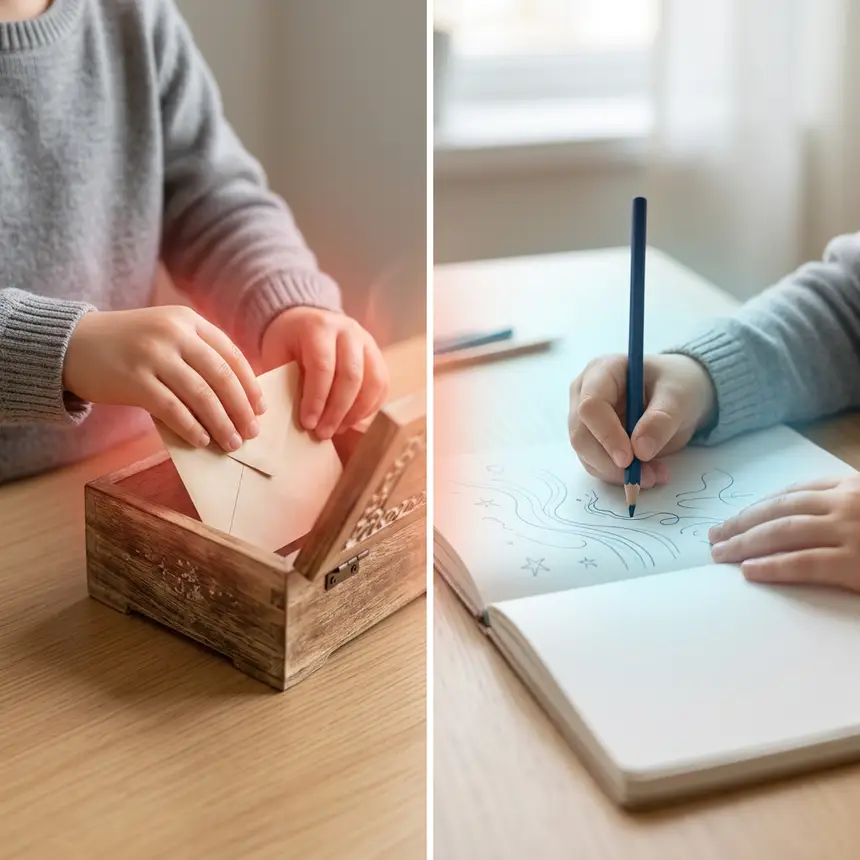
1. 'Today's Feeling Canvas': Before bed, encourage your child to draw their most prominent emotion of the day on a sketchbook or piece of paper. Visualizing emotions, even those hard to put into words, helps children view their feelings more objectively. As a parent, discuss the drawing with your child, empathizing with the message it conveys. Let your child decide if they want to revisit the drawing tomorrow morning or if they'd prefer to fold it into a paper airplane and 'send the feeling away.'
2. 'Worry Pocket' Creation: If your child struggles with anxiety or worries about specific situations (e.g., a presentation tomorrow, making new friends), create a 'worry pocket' using a small cloth pouch or a decorative box. Guide your child to write or draw their worries on small pieces of paper and place them into the pocket. Reassure them by saying, "This pocket will keep your worries safe. You can take them out and think about them again in the morning." This externalization of emotional burdens can effectively alleviate their mental load, allowing for a more peaceful sleep.
3. 'Starlight Breathing' and Affirmations: Just before sleep, lie down comfortably with your child and practice slow, deep breathing. Encourage them to feel their belly expand like a balloon as they inhale through their nose and relax their body as they exhale slowly through their mouth. Use imaginative language like, "Imagine starlight filling your body, bringing peace, and as you breathe out, all the day's tiredness floats away." Once their breathing is calm, take a moment to reflect on something good they did today, something they're grateful for, or repeat positive affirmations together three times, such as 'I am loved,' or 'I am brave.' This combines physical relaxation with positive self-perception, promoting sound sleep and boosting self-esteem.
These pre-sleep emotional regulation routines are more than just aids for better sleep; they are a valuable process for teaching children to explore and manage their emotions themselves. Consistent practice will not only benefit your child but also lead to more peaceful and warm evenings for parents. Start these new emotional management habits tonight to support your child's healthy emotional development.
1. 'Today's Feeling Canvas': Before bed, encourage your child to draw their most prominent emotion of the day on a sketchbook or piece of paper. Visualizing emotions, even those hard to put into words, helps children view their feelings more objectively. As a parent, discuss the drawing with your child, empathizing with the message it conveys. Let your child decide if they want to revisit the drawing tomorrow morning or if they'd prefer to fold it into a paper airplane and 'send the feeling away.'
2. 'Worry Pocket' Creation: If your child struggles with anxiety or worries about specific situations (e.g., a presentation tomorrow, making new friends), create a 'worry pocket' using a small cloth pouch or a decorative box. Guide your child to write or draw their worries on small pieces of paper and place them into the pocket. Reassure them by saying, "This pocket will keep your worries safe. You can take them out and think about them again in the morning." This externalization of emotional burdens can effectively alleviate their mental load, allowing for a more peaceful sleep.
3. 'Starlight Breathing' and Affirmations: Just before sleep, lie down comfortably with your child and practice slow, deep breathing. Encourage them to feel their belly expand like a balloon as they inhale through their nose and relax their body as they exhale slowly through their mouth. Use imaginative language like, "Imagine starlight filling your body, bringing peace, and as you breathe out, all the day's tiredness floats away." Once their breathing is calm, take a moment to reflect on something good they did today, something they're grateful for, or repeat positive affirmations together three times, such as 'I am loved,' or 'I am brave.' This combines physical relaxation with positive self-perception, promoting sound sleep and boosting self-esteem.
These pre-sleep emotional regulation routines are more than just aids for better sleep; they are a valuable process for teaching children to explore and manage their emotions themselves. Consistent practice will not only benefit your child but also lead to more peaceful and warm evenings for parents. Start these new emotional management habits tonight to support your child's healthy emotional development.
Frequently Asked Questions
Q. Why is a bedtime emotional regulation routine important for a child's emotional development?
A. Children often find it challenging to process the various emotions they experience during the day. A pre-sleep routine provides time to recognize, express, and resolve these feelings, which helps increase emotional security and reduce stress. This also positively impacts a child's self-esteem and problem-solving skills in the long run.
Q. What if my child resists participating in the emotional regulation routine?
A. It's more effective to offer choices rather than force participation. Let your child pick activities they find interesting from a range of emotional regulation methods, or adapt the approach daily based on their mood. Parents setting a relaxed and enjoyable example can also be very effective.
Q. At what age should we start a pre-sleep emotional regulation routine?
A. It's recommended to gradually begin around 3-4 years old, when children start recognizing their emotions. Start with simple activities like drawing or short conversations, then gradually expand to deeper emotional expression as your child grows and develops.
Q. How long should an emotional regulation routine ideally last?
A. The key is quality interaction, not length. Usually, 10 to 20 minutes is sufficient. It's important to conclude before your child loses focus or becomes bored, and to practice consistently. Adjust the time flexibly, observing your child's reactions.