Help your child communicate complex emotions easily and effectively with the 'Emotion Thermometer.'
Invest 10 minutes at home to boost your child's self-awareness and emotional regulation skills.

H2. Understanding Unspoken Feelings: Peeking into a Child's Complex World
Have you ever asked your child, “How was school today?” only to receive a brief, uninformative answer like “Fine” or “I don’t know”? It can be frustrating when children struggle to articulate their intricate emotions as adults do, especially during periods of stress or new experiences. How can we truly understand and support a child's feelings that they can't quite express in words? This article introduces an effective method to help children regulate their emotions and develop self-awareness about their inner states.

H2. Overcoming Emotional Expression Challenges: Bridging the Communication Gap
For children, emotions can be as elusive as smoke – abstract and hard to grasp. While they experience joy, sadness, anger, and anxiety, categorizing and expressing these feelings with appropriate vocabulary demands significant cognitive skills. This difficulty can lead to communication breakdowns with parents and hinder a child's ability to understand and manage their own emotions. Without consistent practice in recognizing and verbalizing their feelings, children might suppress their inner states, leading to sudden outbursts of anger or profound sadness. Therefore, providing a visual tool to help children identify and articulate their emotional state is crucial.
※ This post contains affiliate links. I may earn a commission at no extra cost to you.

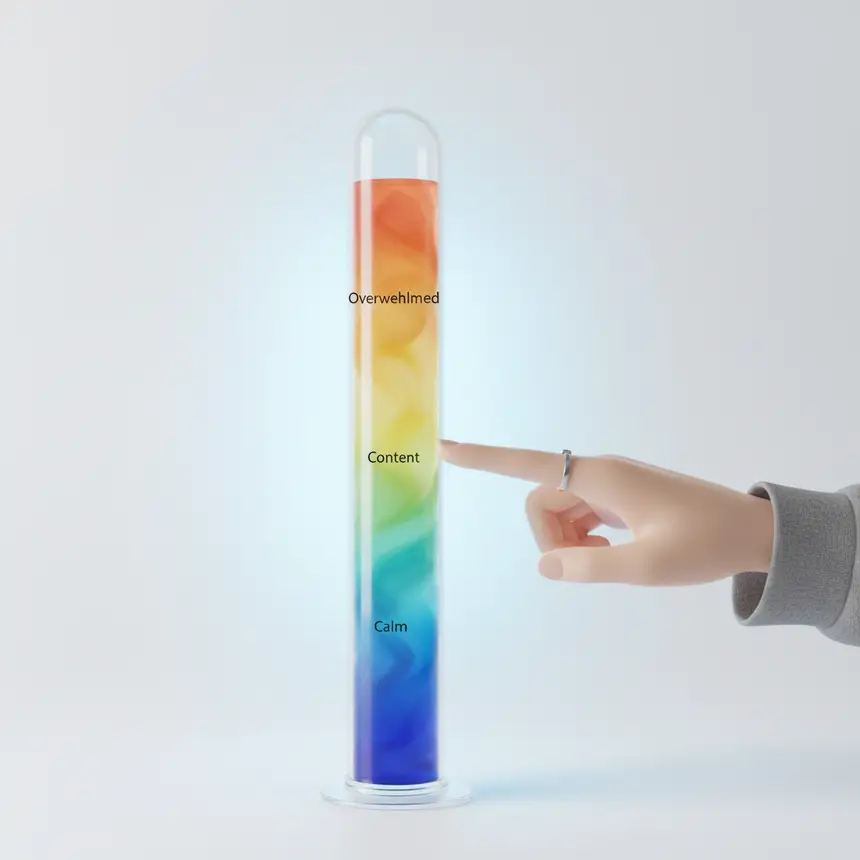
H2. The First Step to Self-Awareness: Objectifying Emotions with an Emotion Thermometer
The initial step in fostering a child's emotional regulation is helping them 'recognize' their feelings. A powerful tool for this is the 'Emotion Thermometer.' This method visualizes abstract emotional states using numbers and colors, allowing children to objectively understand their own emotional fluctuations. For instance, instead of commanding, “Don’t be angry!”, you might say, “It seems your emotional temperature has risen a little.” This approach helps children observe their state together with you. Through this process, children naturally develop the ability to regulate their emotions through self-observation, rather than relying solely on external intervention. The key is to confirm their current state without judgment of right or wrong.

H2. A Daily 10-Minute Routine: Guiding Your Child's Emotional Growth with the Emotion Thermometer
You can implement the Emotion Thermometer at home with just a 10-minute investment each day. Follow these steps:
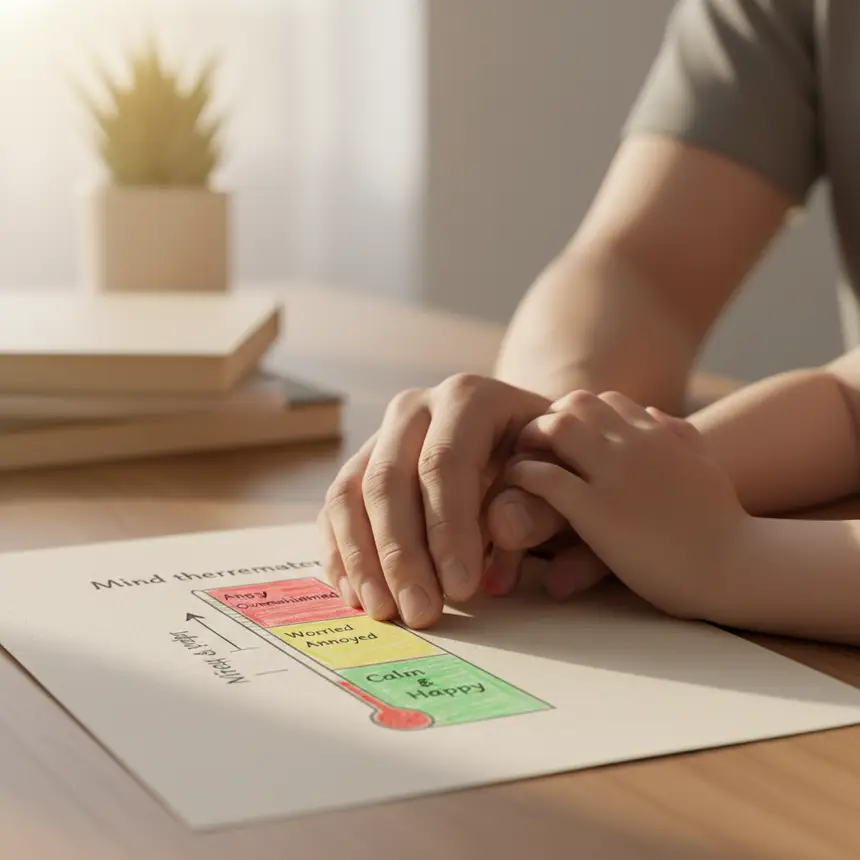
- 1. Draw a Thermometer (1 minute): Draw a long, vertical thermometer on a piece of paper. Mark a scale from 0 to 10 or 1 to 5.
- 2. Define the Scale (1 minute): With your child, assign meanings to the scale. For instance, lower numbers could mean 'calm, comfortable,' while higher numbers signify 'big feelings, tension.' Focus on describing the state, not judging it.
- 3. Mark Today’s Emotional Temperature (5 minutes): Ask your child to recall situations they experienced and mark the corresponding number on the thermometer. Two to three short questions like, “What was your emotional temperature after school today?” or “How about when you were doing homework?” are sufficient. If their answer is brief, just marking the number is fine.
- 4. Color and Ask the 'Magic Question' (3 minutes): Let your child color the different temperature ranges with colors they choose. Once the drawing is complete, instead of asking “Why is it high?”, focus on your child’s 'emotional signals.' Ask, “What do you feel in your body when your temperature goes up?” (e.g., hot face, rapid breathing, clenched hands, loud voice). Conclude by saying, “So, [Child’s Name], when your temperature rises, these are your signals.”
- 5. Next Step (Optional): Ask, “What might help your temperature go down?” (e.g., three deep breaths, a short break, a hug, a sip of water). Choose one method to try.
H2. The Miracle of Consistency: Fostering Emotional Bonds and Autonomy
The primary goal of the Emotion Thermometer is not to delve into and analyze your child's emotions, but simply to 'share the experience of checking their state.' When parents acknowledge and empathize with their child's emotional signals, children feel a deep sense of understanding and security. This consistent 10-minute dialogue plays a critical role in helping children independently develop the power to recognize and regulate their own emotions. Furthermore, it significantly contributes to building deep trust and emotional connection between parents and children. Why not try checking each other’s emotional temperatures tonight? Anticipate the positive changes that this small practice will bring.
Frequently Asked Questions
Q. Can the 'Emotion Thermometer' be adapted for children of all ages?
A. Yes, absolutely. For very young children, you can start with a simple scale from 1 to 5 and encourage them to express emotions through colors or drawings. For school-aged children and older, a more detailed scale from 0 to 10 can be used, expanding to connect specific situations with physical signals.
Q. What should I do if my child resists using the Emotion Thermometer?
A. Initially, your child might feel unfamiliar or uninterested. Instead of forcing it, it's often helpful for parents to model by sharing their own emotional temperature. For example, you could say, “Mommy felt a little tense at work today, so my emotional temperature is around 7.” Approach it casually, and be patient, waiting until your child is ready.
Q. Do I need to use the Emotion Thermometer perfectly every day?
A. No, perfect daily use isn't necessary. While consistency is important, it's okay to skip days occasionally. The key is the repeated 'experience of checking in with feelings.' Consistent, even brief, attempts are more effective for developing a child's self-awareness and emotional regulation skills.
Q. Why shouldn't I ask 'why' with the 'magic question'?
A. Asking 'why?' can put pressure on children to 'explain' their emotions, leading them to become defensive. Instead, questions like 'How does it feel?' or 'What signals does your body give you?' help children 'observe' and 'recognize' their emotional state as it is. This approach is much more effective in building self-awareness, which is the first step in emotional regulation.
Q. Are there other ways to help my child express emotions besides the Emotion Thermometer?
A. Besides the Emotion Thermometer, there are many other methods, such as using emotion cards, reading storybooks about feelings, or encouraging emotional expression through drawing or role-playing. The most important thing is to create an environment where your child feels comfortable exploring and expressing their emotions by trying various approaches tailored to their unique personality and situation.